
Wedding transportation has a planning problem that gets worse the more guests you have flying in.
The ceremony venue is booked. The catering is sorted. The photographer is confirmed. But 60 guests are arriving at Pearson, YVR, or YYC across a 36-hour window, most of them from out of town, and nobody has figured out how they are all getting from the airport to the hotel, from the hotel to the rehearsal dinner, from the rehearsal dinner back to the hotel, and then to the ceremony the next morning.
This is where wedding transportation planning either holds the day together or quietly unravels it.
Here is how to think through the logistics for each major wedding market we serve, and which vehicle matches each scenario.
The Core Problem: Three Separate Movements, One Budget
Most couples think about wedding transportation in terms of the ceremony-to-reception run. That is one of three distinct movements that require coordination.
Movement 1: The Arrival Window Out-of-town guests arrive across multiple flights over one or two days. Airport pickups in small groups or a staged shuttle loop from the terminal to the hotel block.
Movement 2: The Wedding Day Loop Hotel to ceremony. Ceremony to reception. Reception back to hotel (often in two or three departure windows late at night).
Movement 3: The Departure Day Guests checking out and heading back to the airport, usually on a Sunday morning when checkout times cluster together.
Couples who plan all three movements upfront have significantly smoother weekends than those who only book the ceremony-to-reception run and leave the rest to Uber.
Matching the Vehicle to the Guest Count
The right vehicle for a wedding depends less on the occasion and more on the number of guests making each movement.
| Guest Count Per Movement | Recommended Vehicle | Best For |
|---|---|---|
| 6 to 14 guests | Ford Transit (14-passenger) | VIP bridal party, small rehearsal dinner runs |
| 14 to 20 guests | Ford E450 Bus (20-passenger) | Medium guest loops, hotel to venue |
| 20 to 30 guests | International Bus (30-passenger) | Larger guest loops, multi-stop hotel pickups |
| 30 to 56 guests | Coach Bus | Full guest transfers, destination weddings |
One vehicle does not have to do everything. A common setup is a Ford Transit for the bridal party and VIP family members on a dedicated run, plus a 30-passenger International Bus running a loop for general guests. The two vehicles work on different schedules without getting in each other's way.
How It Works by City
Vancouver Weddings
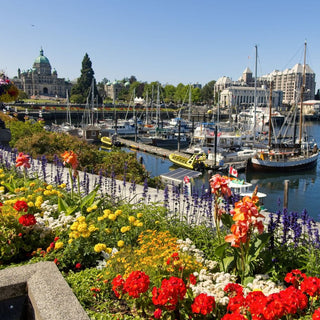
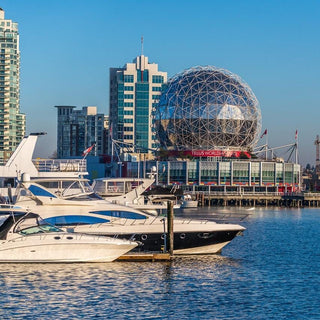
Vancouver wedding venues range from downtown hotels like the Fairmont Pacific Rim and the Rosewood Hotel Georgia to destination properties like Sutsutsen (formerly Point Grey) or venues in the Fraser Valley and the Sunshine Coast requiring ferry connections.
For city venues, the standard approach is a hotel pickup loop covering the downtown core, then a single run to the ceremony. For venues outside the city -- think Squamish, Whistler, or Langley -- the charter becomes a longer point-to-point run, and the vehicle size matters more because guests are together for 45 to 90 minutes each way.
The late-night return from reception venues is the window most couples underestimate. Guests leaving a Whistler reception at midnight need a reliable way back to Vancouver hotels. Ride-share surge pricing on a Saturday night in that corridor is significant. A pre-booked coach staged at the venue is the clean solution.
View Vancouver wedding shuttle options.
Whistler Weddings
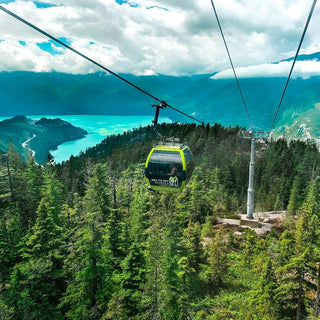
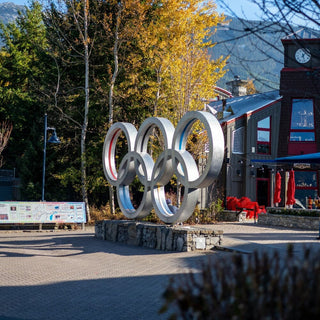
Whistler is one of the most popular destination wedding locations in BC, and it presents a specific logistics challenge: guests are often spread across Whistler Village hotels, Creekside, and occasionally Pemberton, and the venue is rarely in the same place as the hotel block.
The most common setup we run for Whistler weddings is a Transit or E450 for the bridal party from the hotel to the venue, and a larger bus running two or three pickup loops from different hotels in the village before the ceremony. For the return, a single staged departure and a secondary departure 90 minutes later covers the split between early leavers and the group that stays for the last dance.
For guests flying into YVR and continuing to Whistler, coordinating airport pickups with a Vancouver to Whistler charter is often easier than having guests arrange their own transfers up the Sea-to-Sky.
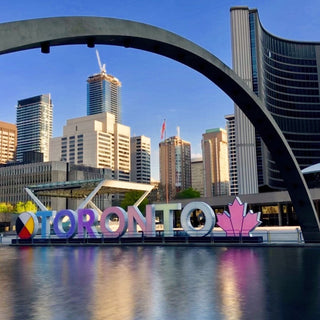
Toronto Weddings
Toronto has two distinct wedding transportation problems depending on where the venue is.
Downtown venues (Archeo in the Distillery District, the Bram & Bluma Appel Salon, Steam Whistle Brewing) are relatively easy -- guests are in a compact area and a 20 to 30-passenger bus running a hotel loop covers most needs.
The harder scenario is the venue outside the city: Nestleton Waters in the Kawarthas, Balls Falls in Niagara, or a vineyard property in Prince Edward County. These are 90-minute to 2-hour drives from downtown Toronto, and guests need both inbound and outbound transportation on the wedding day. A 56-passenger coach handles the volume for larger weddings; a 30-passenger International Bus works well for more intimate guest lists.
View Toronto wedding charter options.
Collingwood and Blue Mountain Weddings
Blue Mountain is one of Ontario's fastest-growing destination wedding markets, and it has the same challenges as Whistler at a smaller scale. Most guests stay in village accommodations or Collingwood proper, and the venues range from the on-mountain properties to farm venues in the surrounding countryside.
For most Collingwood weddings, a Ford Transit or E450 covers the bridal party and close family, and a second vehicle handles the guest loop. The drive from Toronto to Collingwood is about 90 minutes, which makes a coach transfer from the city a common addition for couples whose guests don't have cars.
View Collingwood charter options.
Calgary and Banff Weddings
Calgary weddings that push into the mountains -- Banff Springs, Silvertip in Canmore, or venues along the Bow Valley Parkway -- need proper charter planning because the drive from Calgary is 90 minutes each way and guests cannot reasonably drive themselves if the reception involves an open bar.
A 30 to 56-passenger coach from downtown Calgary to Banff or Canmore, staged at the venue for two return departures, is the standard setup for destination mountain weddings out of Calgary.
View Calgary and Banff charter options.
The Three Things to Confirm Before You Sign Anything
1. Staging location at the venue. Not every venue has a dedicated bus bay or a pull-through driveway. Confirm with your venue coordinator where the bus can stage for guest loading, especially for late-night returns. A 56-passenger coach cannot turn around in a gravel laneway.
2. How many return departures you need. A single late-night return works for weddings where everyone leaves around the same time. Most receptions need two windows -- one around 10:30 PM for guests with young children or early flights, and a final run closer to midnight. Book both upfront.
3. What "on time" means for your timeline. Wedding timelines run late. Building in a 15-minute buffer between "ceremony ends" and "bus departs for reception" is not being pessimistic -- it is how you avoid the bus sitting in a parking lot while the photographer finishes the family shots.
Book Before Your Venue Books Out
June, July, August, and September Saturdays in Vancouver, Whistler, Toronto, and the Blue Mountains book out 6 to 12 months ahead. Charter vehicles for those same dates follow a similar pattern. If the date is confirmed, the transportation should be one of the first vendor calls you make, not one of the last.
Request a wedding shuttle quote and we will put together the right vehicle combination for your guest count, venue, and timeline.